
Sematuridae
Subfamily Guides
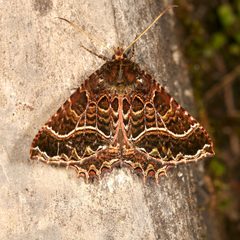
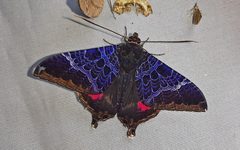
1is a of in the order Lepidoptera, containing approximately 42 across two : Sematurinae (Neotropics) and Apoprogoninae (South Africa). Members are large, day- or night-flying moths with tailed wings, superficially resembling Uraniidae. The family's phylogenetic position within Macrolepidoptera remains uncertain, though it is generally placed in the superfamily Geometroidea. Recent museomics studies using museum specimens have provided genomic data to clarify relationships among sematurids and related families.
Pronunciation
How to pronounce Sematuridae: //sɛməˈtjʊəraɪdiː//
These audio files are automatically generated. While they are not always 100% accurate, they are a good starting point.
Identification
Distinguished from Uraniidae by the combination of chaetosemata with long setae overhanging the , thickened with clubbed or hooked tips, and absence of tympanal organs. The Apoprogones, Anuropteryx, and Lonchotura deviate from the typical uraniid-like tailed appearance and require careful examination of antennal and abdominal characters for correct placement.
Images
Distribution
Disjunct distribution: Apoprogoninae represented by a single in South Africa; Sematurinae comprising approximately 29-41 species (depending on inclusion of Anurapteryx and Lonchotura) in the Neotropics. Most species occur in remote, hard-to-reach geographic locations.
Human Relevance
Subject of recent museomics research using museum specimens dating to 1892, demonstrating that genomic data can be extracted from century-old pinned specimens to resolve phylogenetic relationships. Live specimens are difficult to obtain due to remote distributions, making museum collections essential for study.
Similar Taxa
- UraniidaeSimilar general appearance with large size and tailed wings; distinguished by presence of tympanal organs and different antennal structure in
- EpicopeiidaeHistorically confused due to morphological similarity; genomic studies have clarified that is more closely related to Pseudobistonidae than to
- PseudobistonidaeGenomic data indicate Pseudobistonidae and are sister groups, though morphologically distinct
More Details
Museomics significance
was one of three used to validate 'museomics'—the extraction of genomic data from museum specimens. Target enrichment of 378 nuclear genes from specimens collected 1892-2001 successfully resolved phylogenetic relationships, corroborating most -based hypotheses while demonstrating the technique's power for with limited fresh material.
Biogeographic puzzle
The relictual distribution spanning South America and Africa has been hypothesized to relate to the geological split of Gondwana, though no molecular divergence date estimates currently exist. New genetic material from the South African Apoprogoninae and American Anurapteryx and Lonchotura would be required to test this hypothesis.