
Ptilodactylidae
Laporte, 1838
Toe-winged Beetles
Subfamily Guides
4- Anchytarsinae
- Araeopidius(toe-winged beetles)
- Paralichus(toe-winged beetles)
- Ptilodactylinae
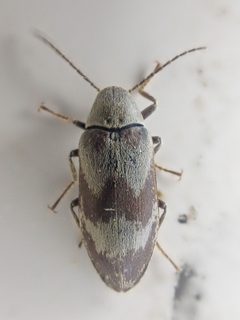
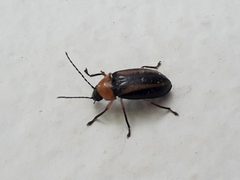
is a of approximately 500 extant in 35 , commonly known as toe-winged beetles. The family belongs to the superfamily Dryopoidea within Elateriformia. Members are primarily associated with riparian and aquatic , with larvae typically found in rotting wood, vegetation, or gravel and detritus at water margins. The family has a significant but underappreciated fossil record, including specimens preserved in Baltic, Dominican, Mexican, and Rovno amber dating from the Cretaceous through Eocene.
Pronunciation
How to pronounce Ptilodactylidae: //ˌtaɪloʊˈdæktɪlaɪˌdiː//
These audio files are automatically generated. While they are not always 100% accurate, they are a good starting point.
Images
Habitat
Riparian and aquatic . Larvae inhabit rotting wood, vegetation, or gravel and detritus at the edges of water bodies. Some occupy hygropetric habitats—thin water films on rock surfaces. may be found in similar moist environments, with some species recorded from indoor environments rich in organic substrates and ornamental plants.
Distribution
distribution with records from North America (western coastal regions), Central and South America (Argentina, Rica, French Guiana, Panama, Mexico), Europe (including Poland and Baltic amber deposits), Asia (China, Taiwan, Myanmar Burmese amber), and the Mascarene Islands (Réunion). Fossil evidence extends historical range to Dominican Republic, Mexico, Ukraine (Rovno amber), and Baltic region.
Diet
Larvae feed on submerged rotting wood, plant roots, or woody material. of some feed on fungus using modified brush-like . Adults of at least one species (Araeopidius monachus) probably do not feed.
Life Cycle
Collection records for Araeopidius monachus indicate a three-year . Larval development occurs in soil or decaying organic matter.
Behavior
are uncommon and secretive, making field observations difficult. No present-day have been observed carrying orchid pollinaria, though fossil evidence demonstrates this occurred in the past.
Ecological Role
Larvae contribute to decomposition of woody material and organic matter in aquatic and riparian systems. Historical evidence from Mexican amber (20–26 million years ago) documents pollination of orchids (Annulites mexicana), indicating a previously unrecognized but evolutionarily significant role in plant- relationships.
Human Relevance
One (Ptilodactyla exotica) has been accidentally introduced outside its native range and is now established in the United States and eleven European countries, where it occurs in indoor environments with ornamental plants. The has contributed to understanding of -orchid through exceptional fossil preservation in amber.
Misconceptions
The 's role in orchid pollination has been underestimated; while no extant are known to carry pollinaria, fossil evidence demonstrates this interaction occurred for at least 20 million years. The apparent absence of modern observations likely reflects secretive rather than genuine ecological discontinuity.
Sources and further reading
- BugGuide
- Wikipedia
- GBIF taxonomy match
- iNaturalist taxon
- NCBI Taxonomy
- Catalogue of Life
- New Fossil Evidence Shows Beetles Pollinated Orchids Millions of Years Ago
- Ptilodactylidae Archives - Entomology Today
- First report of the genus Cladotoma Westwood, 1837 (Coleoptera, Ptilodactylidae, Cladotominae) in Mexico
- A new species of Drupeus Lewis from eastern China (Coleoptera: Ptilodactylidae: Cladotominae)
- Notes on the Life History of the Toed-Winged Beetle Anchytarsus bicolor (Melsheimer) (Coleoptera: Ptilodactylidae)
- The first record of alien beetle species Ptilodactyla exotica Chapin, 1927 (Coleoptera: Dryopoidea: Ptilodactylidae) in Poland
- A Distributional Checklist of North American Genera of Aquatic Dryopoid and Dascilloid Beetles (Elmidae, Dryopidae, Limnichidae, Chelonariidae, Heteroceridae, Psephenidae, Ptilodactylidae, Cyphonidae, Georyssidae)
- A Review of Araeopidius monachus (LeConte, 1874) (Coleoptera: Dryopoidea: Ptilodactylidae), with Main Emphasis on Its Biology and Ecology
- The First Ptilodactyla Illiger, 1807 (Coleoptera: Dryopoidea: Ptilodactylidae) Described from Eocene Baltic Amber
- Description of a new species of Drupeus Lewis (Coleoptera: Ptilodactylidae), with a discussion of the systematic position of the genus based on larval, pupal, and adult characters
- Revealing Palaeogene distribution of the Ptilodactylidae (Insecta: Coleoptera): the first Ptilodactyla Illiger, 1807 records from Rovno amber of Ukraine