
Hydroscaphidae
J.L. LeConte, 1874
skiff beetles
Genus Guides
1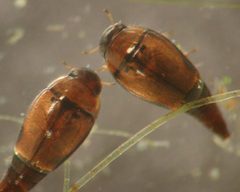
Pronunciation
How to pronounce Hydroscaphidae: /haɪdrəˈskæfɪdiː/
These audio files are automatically generated. While they are not always 100% accurate, they are a good starting point.
Identification
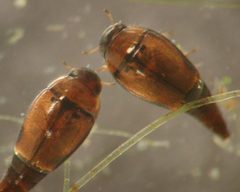
Distinguished from other water beetles by abbreviated that expose multiple abdominal tergites, and wings with conspicuously long setal fringes. The small size (under 2 mm) and association with algal mats in thin water films further separate them from superficially similar . Larvae are with wide and narrowing .
Images
Habitat
Mats of with a thin layer of running water, including accumulated algae lining stream edges. Tolerates wide temperature range, from hot springs to icy snowmelt. Described as hygropetric in some sources.
Distribution
Reported from every continent except Antarctica. distributed as follows: Hydroscapha in United States and Europe; Scaphydra in Brazil; Yara in South and Central America; Confossa in South America; Hydroscapha andringitra described from Madagascar (Fianarantsoa region).
Diet
forming the mats on which they live.
Life Cycle
Reproductive cycle poorly known. In at least one , female lays single large on algal mat. Larvae are with wide and narrowing .
Similar Taxa
- TorridincolidaeAlso myxophagan water beetles in hygropetric , but distinguished by complete covering and different larval
- SphaeriusidaeSmall myxophagan beetles, but have rounded body form and complete , lacking the abbreviated elytra and exposed tergites of
More Details
Taxonomic recency
Several have been described recently, including Hydroscapha andringitra from Madagascar (2015) and multiple new species in the Incoltorrida (Torridincolidae, sometimes confused with in literature). composition has been relatively stable with 23 species recognized as of 2010.
Associated organisms
Specimens of related myxophagan beetles (Incoltorrida madagassica) have been observed with peritrich ciliates of the Platycola Kent attached, though this specific association has not been documented for itself.