
Aderidae
Csiki, 1909
ant-like leaf beetles
Tribe Guides
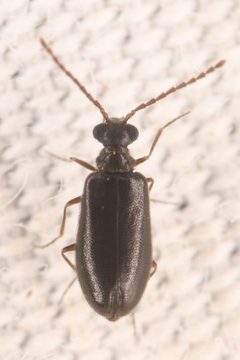
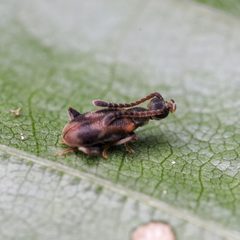
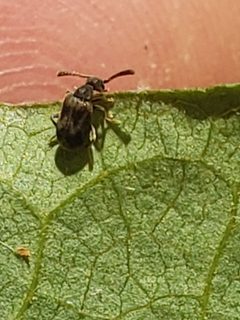
5is a of small beetles commonly known as -like due to their resemblance to ants. The family contains approximately 1,000 in about 40–50 , with greatest diversity in tropical regions but worldwide distribution. are typically found on the undersides of leaves, while larvae inhabit rotting wood, leaf litter, and occasionally the nests of other insects. The oldest confirmed fossil member, Gryzmalia, dates to the mid-Cretaceous Burmese amber.
Pronunciation
How to pronounce Aderidae: //əˈdɛrɪdiː//
These audio files are automatically generated. While they are not always 100% accurate, they are a good starting point.
Identification
Distinguished from the related Anthicidae by the end of the pronotum, which is not as narrowly constricted. The combination of a neck-like constriction, hairy , and abdominal sternites separates from most other small families. -like body form may cause confusion with actual ants (Hymenoptera) or other ant-mimicking beetles.
Images
Appearance
Habitat
occur primarily on the undersides of leaves of shrubs and trees. Larvae develop in rotting wood, leaf litter, and the nests of other insects. Some are termitophilous, living within colonies.
Distribution
Worldwide in distribution, with highest in tropical regions. Documented from North and South America, Europe, Africa, Asia, and Australasia. Specific regional records include Colombia, Denmark, Norway, Sweden, and the eastern United States.
Host Associations
- termites - -associatedAt least some are termitophilous, with larvae integrated into society and participating in trophallactic feeding
Life Cycle
Larvae of at least some termitophilous construct protective webs prior to . Otherwise, details of developmental stages remain poorly documented across the .
Behavior
of termitophilous are actively persecuted by but survive at nest peripheries due to larval-constructed protective webs. Larvae of these species are integrated into termite trophallactic feeding .
Similar Taxa
- AnthicidaeRelated with similar -like appearance; distinguished by more pronounced pronotal constriction
- FormicidaeActual ants; are beetles with hardened forewings () and different antennal structure
More Details
Taxonomic history
The last world catalog of the was published by Maurice Pic in 1910 as of 2002.
Fossil record
The oldest confirmed member is Gryzmalia from mid-Cretaceous Burmese amber of Myanmar.
Sources and further reading
- BugGuide
- Wikipedia
- GBIF taxonomy match
- iNaturalist taxon
- NCBI Taxonomy
- Catalogue of Life
- Aderus pentatomus (Thoms.) and A. brevicornis (Perris) (Col. Aderidae)
- A new genus and three new species of Termitophilous Aderidae (Coleoptera) from Australia, Papua New Guinea and the Philippines, with notes on their biology