
Pieridae
Swainson, 1820
Whites, Yellows, Sulphurs, Orangetips
Subfamily Guides
2- Coliadinae(Yellows)
- Pierinae(Whites)
is a large of butterflies containing approximately 76 and 1,100 , characterized by white, yellow, or orange coloration with black markings. The family was established by William Swainson in 1820. The name "" is believed to derive from the brimstone (Gonepteryx rhamni), a member of this family historically called the "butter-coloured fly." The family is divided into four : Dismorphiinae, Pierinae, Coliadinae, and Pseudopontiinae. Many species are economically significant as agricultural pests, particularly those feeding on brassicas.
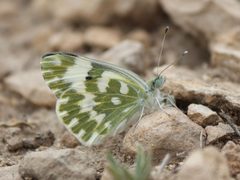
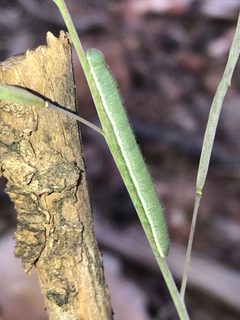
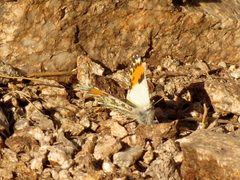
Pronunciation
How to pronounce Pieridae: /ˈpiːrɪˌdeɪ/
These audio files are automatically generated. While they are not always 100% accurate, they are a good starting point.
Identification
butterflies are distinguished by their predominantly white, yellow, or orange wing coloration, often with black spots or markings. The sexes typically differ in pattern or number of black markings. The can be separated from similar families by morphological features: the radial on the forewing has three or four branches (rarely five), forelegs are well developed in both sexes (unlike Nymphalidae), and tarsal claws are bifid (unlike Papilionidae). Pupae are held at an angle by a silk girdle running at the first abdominal segment (versus thoracic girdle in Papilionidae), though some lack this abdominal girdle entirely.
Images
Habitat
vary widely across the 's distribution. occur in tropical forests, savannas, grasslands, agricultural areas, gardens, and temperate woodlands. Many species are associated with open, disturbed habitats including fields, vacant lots, and roadsides where plants grow. Higher elevation species occupy mountain meadows and riparian corridors. The madrone and related species occur in oak-juniper woodlands and riparian forests.
Distribution
Primarily tropical Africa and tropical Asia, with significant representation in northern regions of North America and Eurasia. The has a nearly distribution excluding extreme polar regions and isolated oceanic islands. Individual show varying ranges: some are widespread (), others highly restricted (Pseudopontia paradoxa to West Africa; Euchloe ausonides insulanis limited to San Juan and Lopez islands, Washington).
Seasonality
Activity periods vary by and latitude. Tropical species may be active year-round. Temperate species typically fly spring through fall, with some appearing among the earliest butterflies of the season (e.g., Spring White, Pontia sisymbrii, in late February). Multi-brooded species at lower elevations may have two or more annually; single-brooded species at higher elevations fly in summer. has been recorded flying as early as January 1 in central California under warming climate conditions.
Diet
feed on nectar from diverse flowers. Larvae are herbivorous, feeding primarily on plants in Brassicaceae (mustards, cabbages), Fabaceae (legumes), Capparidaceae, Santalaceae, Loranthaceae, and Rhamnaceae (buckthorns). Specific associations include: brassicas for Pieris brassicae and P. rapae; Rhamnus for Gonepteryx; Sisymbrium, Descurainia, and Arabis for Pontia sisymbrii; Astragalus thracicus for Colias aurorina.
Life Cycle
Complete with , larva (caterpillar), pupa (chrysalis), and stages. Females deposit eggs singly or in small clusters on plant stems and foliage. Larvae progress through five instars. Pupae of most are suspended by a silk girdle; some species attach only at the caudal end. Developmental timing varies: some species produce non- pupae enabling continuous breeding in favorable conditions, while others enter diapause to overwinter.
Behavior
Males of many exhibit gregarious mud-puddling to imbibe salts from moist soils. Some species engage in "," where males fly along ridgelines to intercept females. patterns vary: some are fast and erratic (marbles), others more direct. Several species are strongly migratory, particularly within Pierinae. frequently bask with wings open or closed depending on temperature. Some species demonstrate remarkable camouflage when perched, orienting to conceal bright coloration.
Ecological Role
Larvae function as herbivores, occasionally reaching pest status in agricultural systems. serve as . The represents a significant food source for including birds, spiders, and . Larvae of are preyed upon by Polistes paper wasps and other predators. Some participate in mimicry complexes (Dismorphiinae).
Human Relevance
Several are major agricultural pests, particularly (cabbage white) and P. brassicae (large white), which damage cole crops. The is economically significant in both pest management and conservation contexts. Art Shapiro's long-term "Beer-for-a-" contest tracking first of P. rapae since 1972 has provided valuable climate change data. Some species are cultivated for butterfly houses and educational programs.
Similar Taxa
- PapilionidaePapilionidae pupae have a thoracic silk girdle versus abdominal girdle in ; Pieridae lack tailed hindwings characteristic of many swallowtails.
- NymphalidaeNymphalidae have reduced, brush-like forelegs in ; have fully developed forelegs in both sexes.
- LycaenidaeLycaenidae are typically smaller with more delicate builds, often with iridescent blue or coloration; are generally larger with matte white, yellow, or orange pigmentation derived from waste products.
Sources and further reading
- BugGuide
- Wikipedia
- GBIF taxonomy match
- iNaturalist taxon
- NCBI Taxonomy
- Catalogue of Life
- Beer-for-Butterfly Contest Set; Why It's of Special Interest This Year | Bug Squad
- Pieridae | Beetles In The Bush
- Bug Eric: Spring White
- Bug Eric: Marble-ous!
- This Artificial Diet May Make Insect Rearing Easier
- Bug Eric: Wasp Wednesday: Polistes exclamans
- Habitat: Pieris occidentalis (Pieridae)
- GENUS GONEPTERYX (LEPIDOPTERA, PIERIDAE) AT THE RUSSIAN FAR EAST: TAXONOMY, BIONOMY AND DISTRIBUTION
- New records of rare pierids (Lepidoptera: Pieridae) in Slovenia Novi podatki o najdbah redkih vrst belinov (Lepidoptera: Pieridae) v Sloveniji
- First record of the Greek clouded yellow Colias aurorina Herrich-Schäffer, 1850 (Lepidoptera: Pieridae) for Albania Prva najdba grškega senožetnika Colias aurorina Herrich-Schäffer, 1850 (Lepidoptera: Pieridae) v Albaniji
- Оценка состояния Euchloe tomiris Christoph, 1884 (Lepidoptera, Pieridae) и меры по сохранению ее популяции в Таджикистане
- Impact of Wolbachia infection on population ecology of Pieridae butterflies in India
- Biology of Pigmentation in Pieridae Butterflies
- Presencia y distribución de dos sub-especies de Eurema agave (Lepidoptera, Pieridae) en Costa Rica Presence and distribution of two sub-species of Eurema agave (Lepidoptera, Pieridae) in Costa Rica
- The genome sequence of the Portuguese Dappled White, Euchloe tagis (Hübner, 1804) (Lepidoptera: Pieridae).
- The genome sequence of the Eastern Pale Clouded Yellow, Colias erate (Esper, 1805) (Lepidoptera: Pieridae).