
Diastatidae
Hendel, 1917
Genus Guides
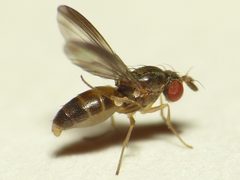
2are a small of minute flies in the order Diptera, containing over 20 described in three extant plus one fossil genus. They are primarily distributed in the Holarctic Region, with some species extending into the Oriental, Neotropical, and Australasian regions. The family was historically confused with Ephydridae, and the genus Campichoeta is sometimes treated as a separate family Campichoetidae.
Pronunciation
How to pronounce Diastatidae: //ˌdaɪəˈstætɪdiː//
These audio files are automatically generated. While they are not always 100% accurate, they are a good starting point.
Identification
Distinguished from similar small Diptera by the combination of cruciate postvertical bristles, presence of vibrissae, and distinctive wing venation including interrupted and incomplete subcosta. Historically confused with Ephydridae, from which they differ in wing venation and bristle arrangement. Campichoetidae, when treated as separate, differs in genital structure and other morphological features. Identification keys for Palaearctic exist in Duda (1934) and Shtakel'berg (1988), though these require revision.
Images
Appearance
Minute flies with grey or brown-grey body coloration. Wings usually bear dark spots or markings (maculate). possesses cruciate postvertical bristles and vibrissae. Front orbital bristles are inset and directed upward (upswept). Wing venation distinctive: interrupted near end of R1 and sometimes near humeral crossvein; subcosta incomplete, fusing with R1 before apex; basal and discoidal cell separate; anal cell and anal both present.
Habitat
have been observed along margins of bogs, marshes, and edges of moist woodlands. Specific microhabitat requirements are poorly documented.
Distribution
Primarily Holarctic in distribution. Recorded from the Palearctic (Europe, including Denmark, Norway, Sweden; Nepal; Far East), Nearctic (Vermont, USA), and with some extending into the Oriental, Neotropical, and Australasian regions. GBIF records confirm presence in Denmark, Norway, Sweden, and Vermont, USA.
Life Cycle
stages and are largely unknown. Hennig suggested that Campichoeta punctum may represent the immature form, though this remains uncertain.
Similar Taxa
- EphydridaeHistorically confused with ; distinguished by differences in wing venation and bristle arrangement
- CampichoetidaeCampichoeta and related sometimes treated as separate ; differs in genital structure and other morphological features from sensu stricto
Misconceptions
The was once considered by some authors to be part of Ephydridae. The Campichoeta is sometimes treated as a separate family Campichoetidae rather than a of .
More Details
Taxonomic history
The has undergone significant taxonomic revision. Griffiths (1972) recognized Campichoetidae as a separate family for Campichoeta, Euthychaeta, and the fossil Pareuthychaeta, while restricting to Diastata alone. This classification is supported by morphological differences in genital structure and other features.
Species diversity
A 1987 revision recognized 19 of Diastata, including 11 newly described species: 9 European, 1 from the Far East (D. ussurica), and 9 from Nepal. Several synonymies were established and lectotypes designated for previously described species.
Fossil record
The fossil †Pareuthychaeta Hennig 1965 is included in the (or in Campichoetidae if treated separately).