Diaspididae
Armored Scale Insects, Armored Scales, Hard Scales
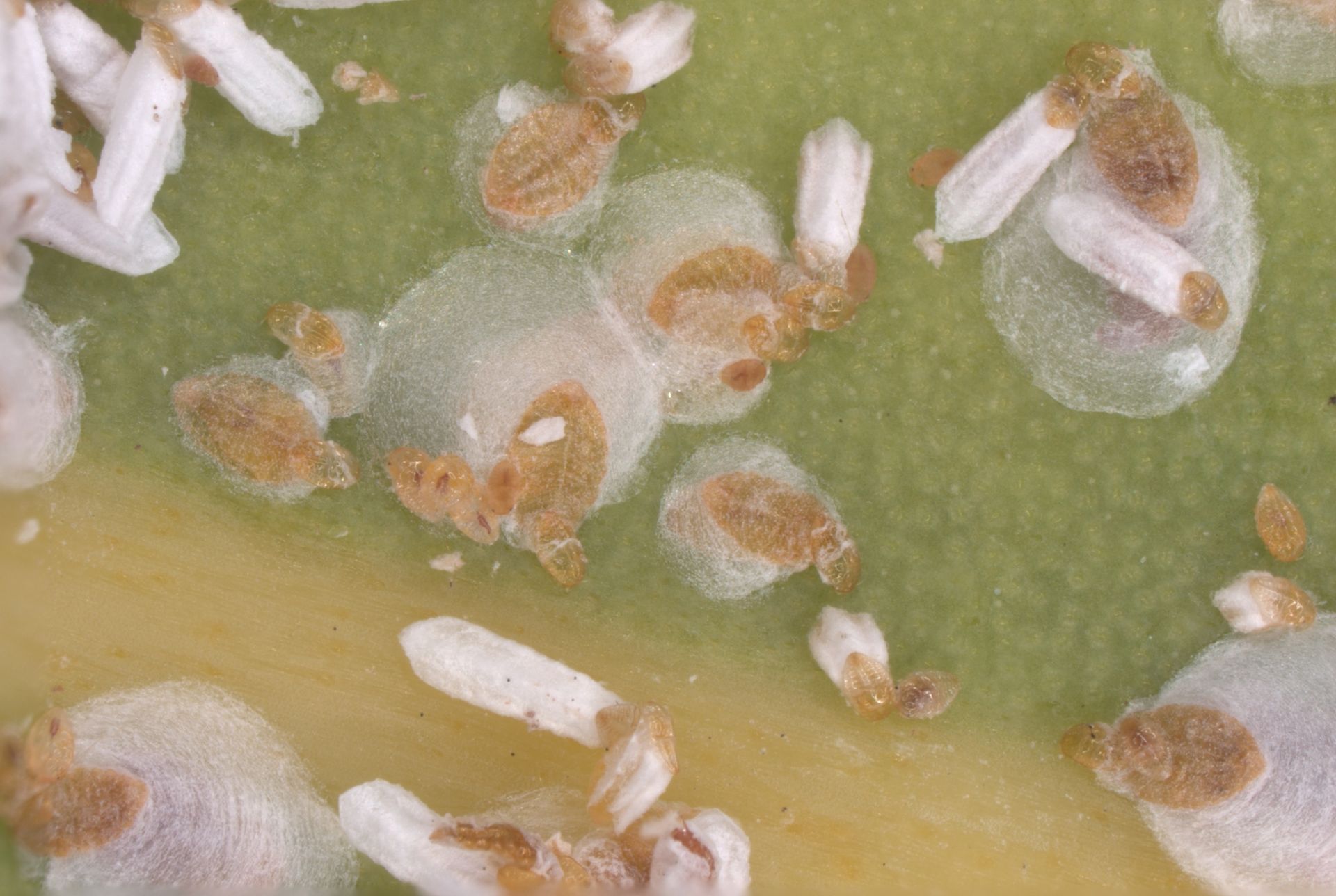
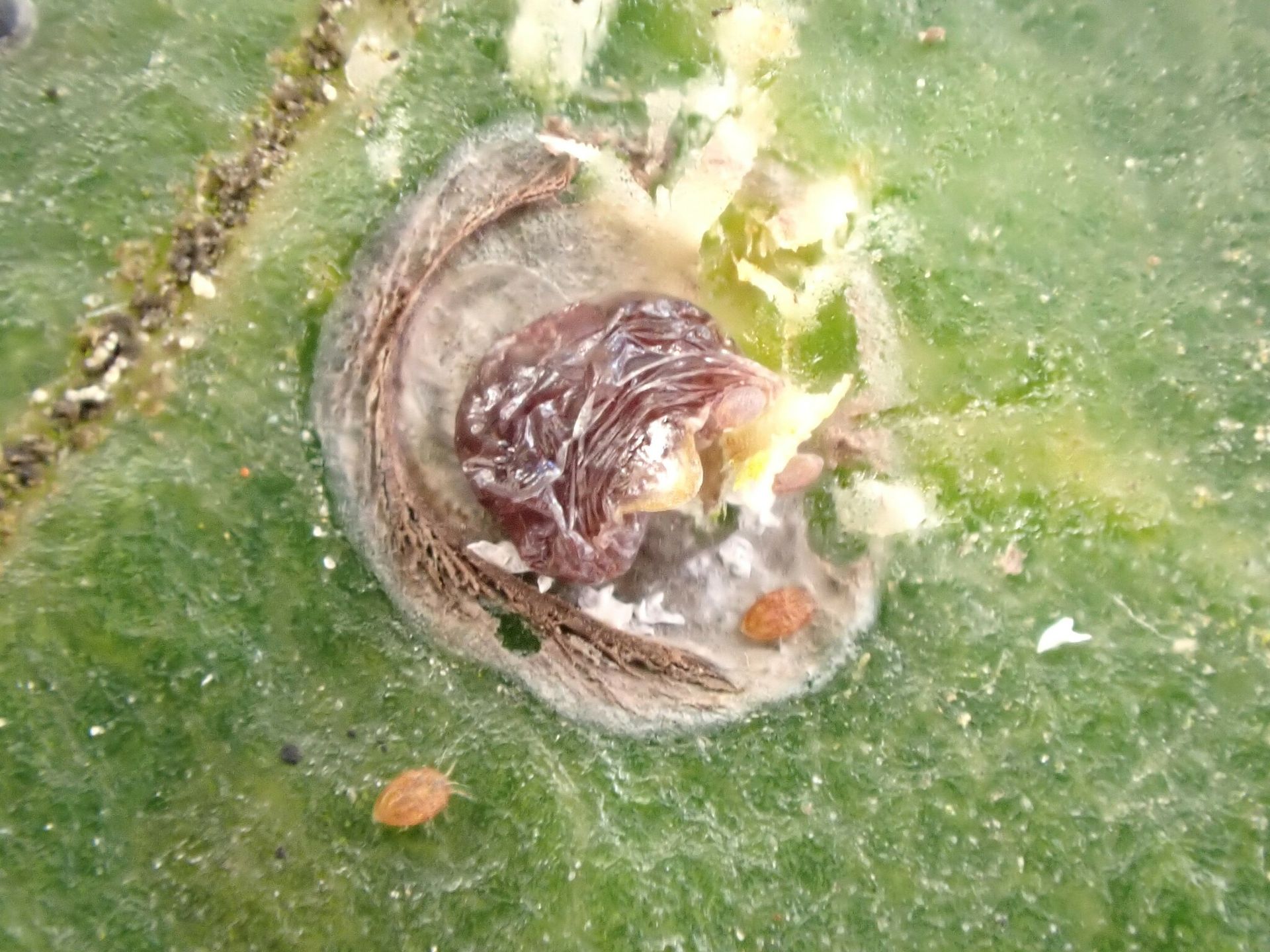
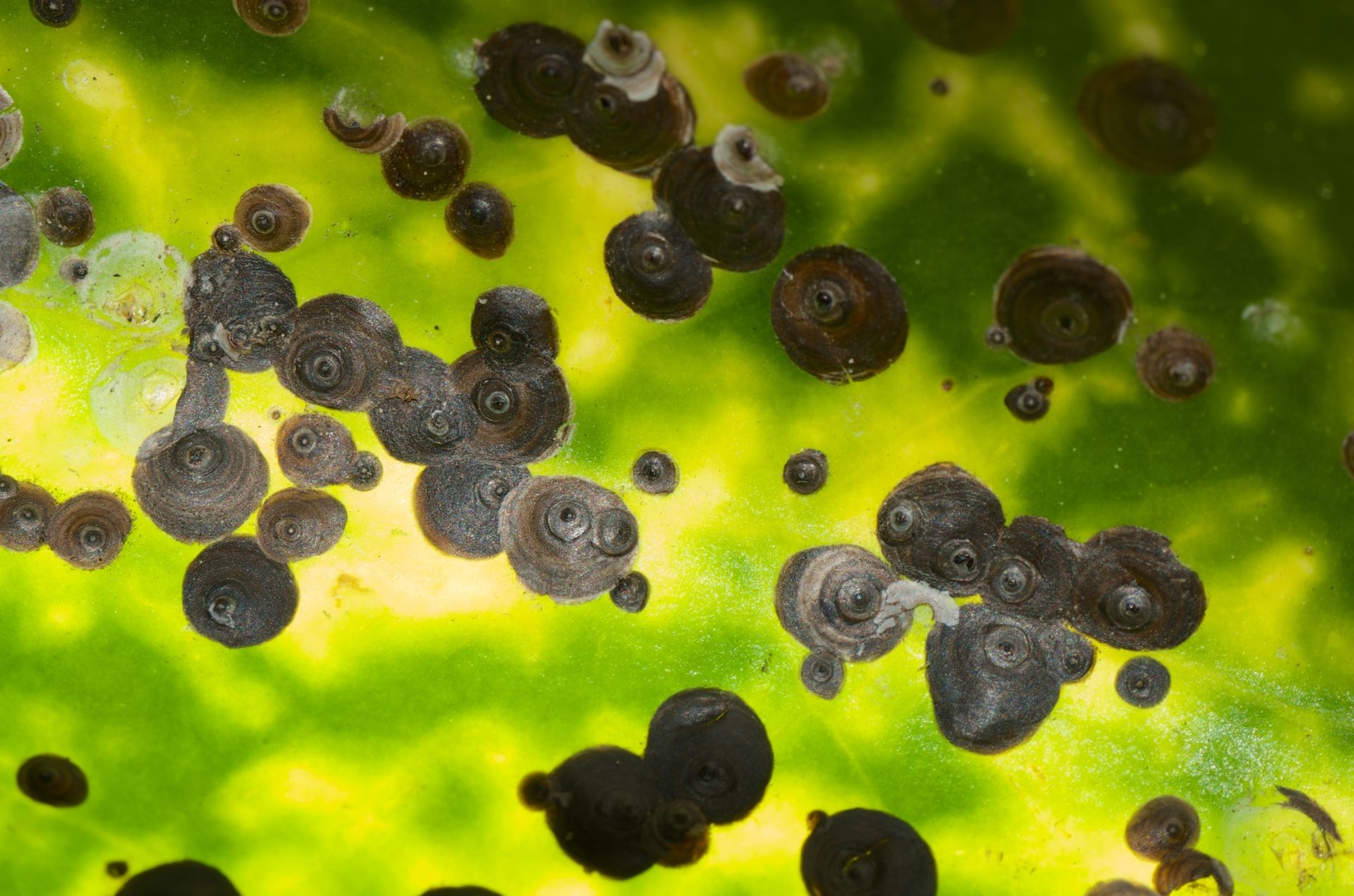
is the largest of , comprising over 2,650 described in approximately 400 . Members are commonly known as due to their distinctive protective covering, which incorporates from the first two nymphal , sometimes with fecal matter and fragments. The female remains permanently beneath this armor, feeding on host plant tissues through . The family includes numerous economically significant pests such as the (Aonidiella aurantii), San Jose (Diaspidiotus perniciosus), and gloomy scale (Melanaspis tenebricosa), which damage , ornamentals, and forest trees worldwide.
Pronunciation
How to pronounce Diaspididae: //ˌdaɪəˈspɪdɪdiː//
These audio files are automatically generated. While they are not always 100% accurate, they are a good starting point.
Identification
Distinguished from other by the female's hard, separable armor (test) that is not to the body and can be lifted to reveal the beneath. The test is constructed from secretions combined with cast skins from the first two nymphal , creating a durable, often circular or elongate structure. Unlike (), do not produce and lack the convex, waxy coating typical of that family. The female is apodous and under the test, while males develop into small, winged, -like with reduced mouthparts.
Images
Habitat
Found on virtually all vascular plants including trees, shrubs, and woody vines. Inhabits bark, leaves, needles, and fruits depending on . Many species thrive in urban and agricultural environments where plants are abundant. Some species occupy specialized : pine needle (Chionaspis spp.) on conifer foliage, oystershell scale (Lepidosaphes ulmi) on deciduous tree bark, and on tropical ornamentals.
Distribution
distribution with highest diversity in tropical and subtropical regions. and occur across all continents except Antarctica. Particularly diverse in the Oriental and Australasian regions. have established in temperate zones through human-mediated transport of material, with significant pest problems in California, Florida, the southeastern United States, Mediterranean Europe, and other regions with intensive horticulture.
Seasonality
Activity patterns vary by and climate. In temperate regions, most species overwinter as or mated females beneath the armor. typically occurs in spring when plants resume growth, with one to multiple per year depending on species and latitude. Some species like gloomy (Melanaspis tenebricosa) reach higher and have extended activity periods in urban heat islands. Tropical and greenhouse may reproduce continuously without .
Diet
Phloem-feeding; all except males insert into tissues to extract sap. Feeding occurs intracellularly rather than in vascular tissues, which renders less effective than against .
Life Cycle
Females reproduce oviparously or ovoviviparously, depositing or live young beneath the protective test. First- () are the only mobile female stage, dispersing to find feeding sites on new growth or other plants. After settling, crawlers and lose their legs, becoming permanently . The second molt produces the female or, in males, a prepupal stage. Males develop through four instars, emerging as winged adults that seek sessile females for mating. The female armor incorporates from the first two molts.
Behavior
Females are entirely sedentary after the stage, remaining fixed beneath their constructed armor for life. Crawlers disperse actively by , or passively via wind, birds, mammals, , or human activity. Males are short-lived, non-feeding, and to locate females. Some exhibit . African species attended by Melissotarsus are completely denuded of their armor, with ants consuming the protective covering while maintaining hidden nests under tree bark.
Ecological Role
that can reach damaging on plants, causing direct injury through sap removal and indirect effects via stress and entry points. Serve as for diverse including (Chilocorus, Rhyzobius), , predatory , predatory , and (especially such as Aphytis and Encarsia ). Some species function as engineers by altering resource allocation, though primarily considered pests in managed systems.
Human Relevance
Major agricultural and horticultural pests causing billions of dollars in damage and control costs annually. Notable pests include threatening citrus, San Jose attacking deciduous fruit trees, oystershell scale damaging orchards and ornamentals, and cycad aulacaspis scale endangering plantings. are increasing with global trade, requiring intensive , , and management efforts. using has been historically successful, as with the vedalia and Aphytis . Management relies on , applications, and conservation of .
Similar Taxa
- Coccidae (soft scales) have convex, waxy bodies often coated with powdery or cottony , produce , and lack the hard, constructed armor of . Their tests are integral to the body, not separable.
- Pseudococcidae (mealybugs) are mobile throughout life, covered with fluffy filaments, and retain legs in all . females become and legless with a hard, non-filamentous armor.
- Monophlebidae (giant scales)Giant are larger, often with prominent waxy , and have more visible body segmentation. are generally smaller with the distinctive constructed test incorporating .
Sources and further reading
- BugGuide
- Wikipedia
- GBIF taxonomy match
- iNaturalist taxon
- NCBI Taxonomy
- Catalogue of Life
- Remounting Procedure for Aphytis | Entomology Research Museum
- New Guide Details Management of Invasive Scale Insect in Florida
- Not If, But When: The Growing Need for Invasive‑Species Research in the Southeast U.S.
- Bug Eric: Striped Pine Scale
- Crapemyrtles are not dreaming of a white Christmas: Crapemyrtle bark scale, Acanthococcus (=Eriococcus) lagerstroemiae — Bug of the Week
- The Warmer the Better: Gloomy Scale Can Be a Big Problem on Urban Landscape Trees
- HOST LIST OF CALIFORNIA DIASPIDIDAE
- Rate Of Diaspididae In Unabi Plant
- DIASPIDIDAE OILASI VAKILLARI BIOEKOLOGIYASINI TADQIQ ETISH
- Distribution Diaspididae (Insecta) and Control Methods
- Ecology of Black Pineleaf Scale (Homoptera: Diaspididae)
- Biology and population dynamics of tea scale, Fiorinia theae Green (Diaspididae: Coccoidea: Homoptera) / by Badar Munir.
- White Peach Scale, Pseudaulacaspis pentagona (Targ.) (Hemiptera: Diaspididae), is affected by host plant variety in a blackcurrant orchard
- Tea Scale, Fiorinia theae Green (Insecta: Hemiptera: Diaspididae)
- Coconut Scale Aspidiotus destructor Signoret (Insecta: Hemiptera: Diaspididae)
- Invasive and indigenous armoured scales (Sternorrhyncha: diaspididae) in urban lanscapes of Ukraine
- EFFECT OF TEMPERATURE ON LIFE HISTORY OF CHRYSOMPHALUS DICTYOSPERMI (MORGAN) (HEMIPTERA DIASPIDIDAE)
- Ecological data of Lepidosaphes gloverii (Hemiptera: Diaspididae) in Greece
- Unraveling an extreme AT-rich and complex mitochondrial genome: the first complete mitogenome of the species-rich family Diaspididae (Hemiptera, Coccomorpha) and its evolutionary implications.
- The first dataset of de novo assembled transcriptome of Aspidiotus destructor Signoret (Hemiptera: Diaspididae).