
Cordulegastridae
Tillyard, 1917
Spiketails, biddie, flying adder
Genus Guides
1- Cordulegaster(Golden-ringed Spiketails)
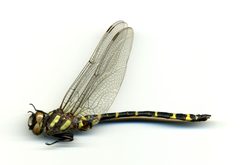
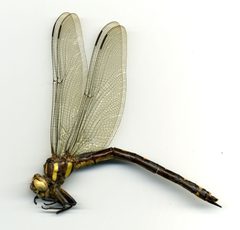
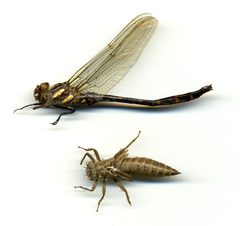
, commonly known as spiketails, is a of dragonflies (Anisoptera) distributed across the Holarctic region. The family contains approximately 51 in three to four , including Cordulegaster, Anotogaster, Neallogaster, and the recently restored Thecagaster and Zoraena. are characterized by large black or brown bodies with yellow markings, blue-green that meet at a single point, and a slow pattern 30–70 cm above water. Nymphs are specialized ambush that conceal themselves in sand or silt substrates of clean, flowing streams.
Pronunciation
How to pronounce Cordulegastridae: //ˌkɔːrdʊlɛˈɡæstrɪdiː//
These audio files are automatically generated. While they are not always 100% accurate, they are a good starting point.
Identification
Spiketails are distinguished from other by: that meet at a single point (versus broadly contiguous in darners or separated in skimmers); narrow, unpatterned wings (versus patterned wings in many skimmers); large size with black body and yellow markings; slow, deliberate 30–70 cm above water; and in females, the prominent spikelike ovipositor that gives the family its . Males differ from females in having yellow versus brown foreheads and slightly clubbed versus unclubbed with ovipositor.
Images
Habitat
Nymphs inhabit small lotic streams with clean sand and silt substrates, requiring flowing water. fly above clear woodland streams and small rivers, rarely venturing far from water. Both life stages are strongly associated with clean, unpolluted running water systems.
Distribution
Holarctic distribution spanning North America, South America, Europe, Asia, and Africa. Cordulegaster occurs in North Africa, Europe, Southwest Asia to China and Japan, plus North America with two in Central America. Anotogaster is restricted to East Asia (China, Vietnam, northeastern Pakistan, Kashmir). Neallogaster occurs in Asia from the Hindu Kush through the Himalayas to China, primarily above 2000 m elevation except N. pekinensis at 500–1500 m. All eight North American species belong to Cordulegaster.
Seasonality
active spring through early summer, with peak activity in June. Typical lifespan of adults is 3–5 years including nymphal stage.
Life Cycle
stage: females deposit eggs in sand in shallow water using prominent ovipositor, hovering vertically and making repeated dips while trapping air bubbles with body hairs to reach substrate. Nymph stage: 3–5 year lifespan primarily as nymph; nymphs are ambush that extend to capture prey. stage: relatively brief compared to nymphal stage.
Behavior
fly slowly 30–70 cm above water when undisturbed, but can fly rapidly when disturbed. Hunt high in forest vegetation, capturing prey resting on leaves or branches (gleaning ). Males are remarkably territorial with behavior varying based on female oviposition activity. Females oviposit by hovering vertically and dipping repeatedly into water.
Ecological Role
Nymphs function as ambush in clean stream , consuming any prey they can capture including smaller larvae. are aerial predators that glean prey from vegetation. Serve as indicators of high-quality, unpolluted lotic .
Human Relevance
Subject of conservation concern; multiple assessed as vulnerable or threatened. Cordulegaster erronea and C. bilineata are highly vulnerable in the northeastern United States; C. obliqua is moderately vulnerable. Five species are IUCN-listed: C. bidentata, C. trinacriae, and C. heros are Near Threatened (Europe); C. helladica and C. sarracenia are Endangered due to loss.
Similar Taxa
- Gomphidae (clubtails)Both have clubbed or expanded in males, but Gomphidae have widely separated versus touching at a single point in , and Gomphidae typically have patterned wings versus unpatterned in spiketails
- Aeshnidae (darners)Both are large dragonflies, but darners have that broadly meet across top of versus single-point contact in , and darners have more robust bodies with different color patterns
- Libellulidae (skimmers)Skimmers often have broad, patterned wings and that do not meet at all, versus narrow unpatterned wings and contiguous eyes in ; skimmers also typically perch more frequently and have different patterns
More Details
Taxonomic Reclassification
Recent molecular phylogenetic analysis (2024) supports reclassification into four : Anotogaster (monophyletic with three synonymizations), Cordulegaster (boltonii group and American ), Thecagaster (restored for bidentata group), and Zoraena (restored for most American Cordulegaster species). Neallogaster remained unresolved in the analysis.
Etymology
name derived from Greek kordylinus ('club-shaped') and ('belly'). 'spiketails' refers specifically to the females' prominent ovipositor.