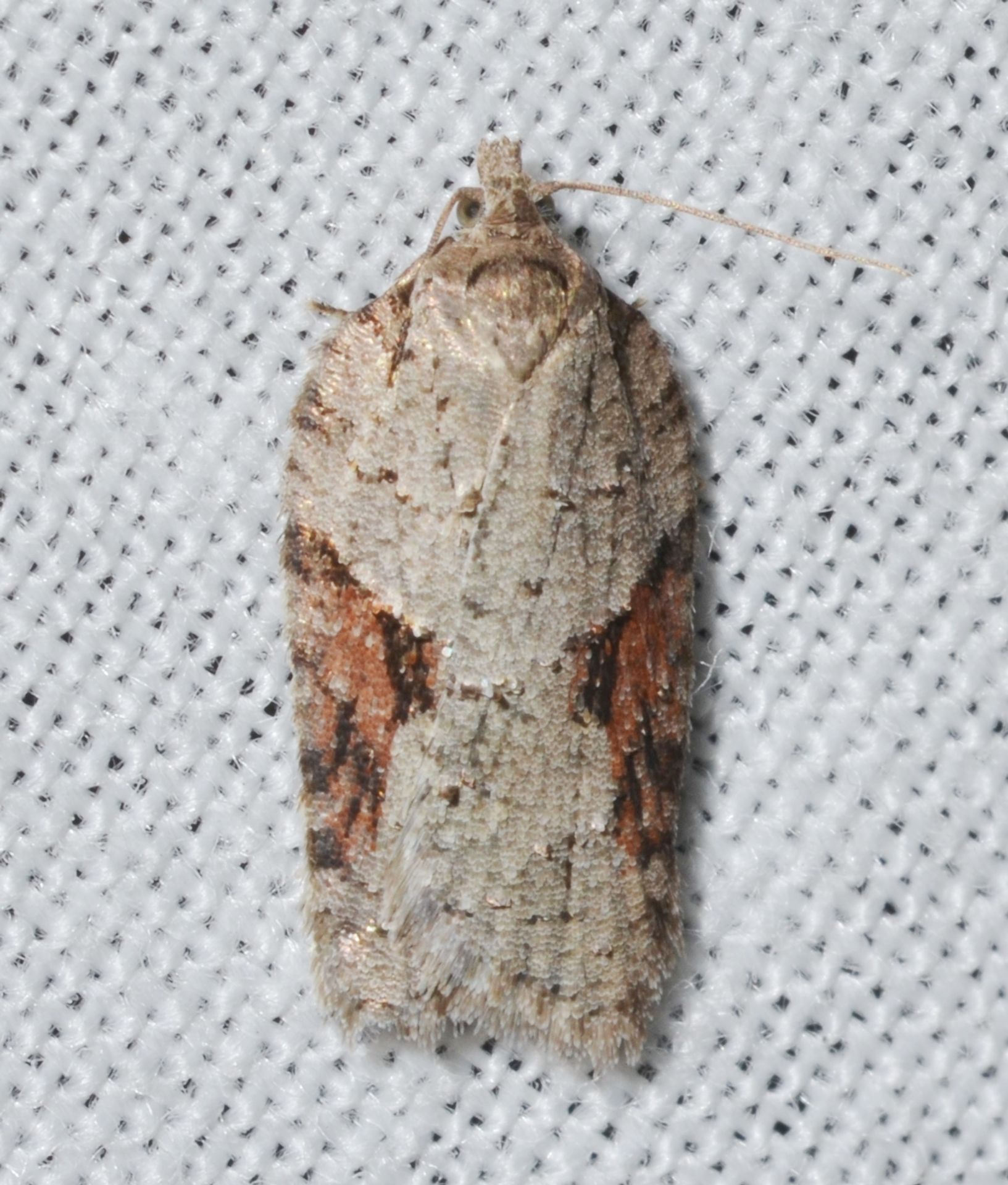
Acleris ptychogrammos
(Zeller, 1875)
A small tortricid with a wingspan of approximately 15 mm. have been recorded on wing nearly year-round in southern parts of its range. The larval plant is red osier dogwood (Cornus sericea).
Pronunciation
How to pronounce Acleris ptychogrammos: /əˈklɛrɪs ˌptɪkoʊˈgræmoʊs/
These audio files are automatically generated. While they are not always 100% accurate, they are a good starting point.
Identification
The small wingspan (approximately 15 mm) distinguishes it from larger tortricid . Definitive identification requires examination of genitalia or molecular analysis; visual identification from similar Acleris species is unreliable based on available sources.
Images
Appearance
Wingspan approximately 15 mm. Specific wing pattern details are not documented in available sources.
Habitat
Associated with riparian and wetland areas where the larval plant Cornus sericea grows. Specific microhabitat preferences for are not documented.
Distribution
North America: recorded from Alabama, British Columbia, Illinois, Indiana, Kentucky, Maine, Manitoba, Maryland, Massachusetts, Michigan, Mississippi, New Hampshire, New York, North Carolina, Ohio, Oklahoma, Ontario, West Virginia, and Wisconsin.
Seasonality
active nearly year-round in the southern United States. Seasonal patterns in northern portions of the range are not documented.
Diet
Larvae feed on Cornus sericea (red osier dogwood). feeding habits are not documented.
Host Associations
- Cornus sericea - larval food plantRed osier dogwood; specific plant parts consumed are not documented
Ecological Role
Larval herbivore on Cornus sericea. Specific ecological impacts or interactions are not documented.
Human Relevance
Not documented as an agricultural or forest pest. No significant documented economic or cultural importance.
Similar Taxa
- Other Acleris speciesMany Acleris are small tortricids with similar general appearance; reliable differentiation requires specialized examination
More Details
Taxonomic history
Originally described as Teras ptychogrammos by Zeller in 1875; later transferred to Acleris.
Observation frequency
iNaturalist records 276 observations, suggesting it is moderately encountered but not commonly reported.